Flypaper Totalitarianism and C.O.E.s
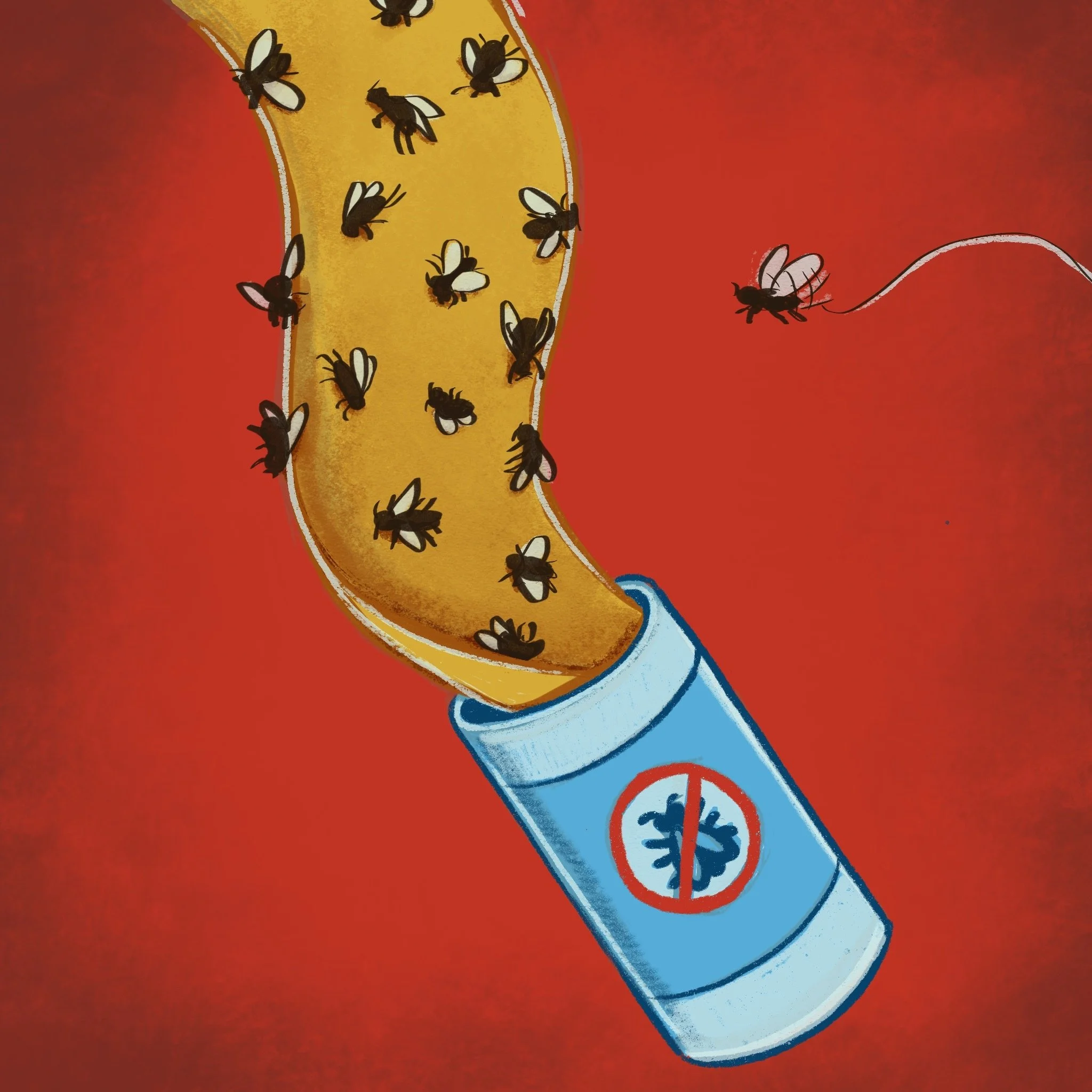
Image created by Andrea Tonkinson
Remember how extremely smart we were when we were seventeen years old? I was at this apex of knowledge a while ago and was unhappy with my dad. “Why didn’t you fight this?” I demanded justice. My dad had just described how as a worker in the German National Socialist (Nazi) controlled railroad during World War Two, he watched as death trains passed by. Cattle cars were filled with starving, freezing, filthy, civilians heading towards horrible ends. My dad was silent after my challenge. Then he shook his head and said, “Helmut, we were in a dictatorship that could shoot you simply on impulse and no one would think it unusual.” I looked into my dad’s eyes and saw a pain that I never saw in him before. He continued; “I was trying to convince myself that they were slave laborers as bad as that was, and not Todeskandidaten/death candidates.” This conversation started a process of questioning my youthful impetuousness. It later inspired the book “Acorns may Travel Far”, a biography based on my dad’s life.
It took a lifetime of reading, political activism, religious and charitable volunteering, travel, working in the media, and just living, to kind of understand my dad. Of particular frustration as I moved through life was often seeing our human instinct towards “flypaper totalitarianism.” That is: just as flies see hundreds of their colleagues stuck on fly paper yet they still hurry to the same sticky surfaces, so we humans keep retrying various renamed Adolf Hitlers. The United States is not free of the tendency of course.
The twentieth century should have taught all on Earth that the only accomplishment of promise making, overly centralized politicians is the promise makers themselves becoming insanely wealthy and powerful. Undeniably, while authoritarians stroke their egos, the travesty comes at outrageous human costs. R.J.Rummel, (Death By Government: 1994,) places the twentieth century cost of “democide” alone at 170+ million souls lost. He came up with the term which describes governmental murder of its own citizens and others under its control. My calculation includes abortion in addition to R.J.Rummel’s “genocide, politicide and mass murder so my numbers are higher though Rummel himself eventually claimed over 400 million people killed by democide in the twentieth century, this in works published after the referenced book. Yet sure as rain, the next generation of “experts” will insist on new excuses to fly into the goo lined paper.
Flypaper totalitarianism is a worldwide malady in every culture, every religion, and all ethnic groups. How does it work? Vladimir Lenin, a founding dictator of the former Soviet Union, has been attributed with coining the term “useful idiots.” The label describes misled folks seeking to accomplish their own demise because of emotionally focused responses to an oligarch’s propaganda and promises. What can you say when a mansion whose annual property taxes already are more than most standard homes’ several years of mortgage payments, yet the villa sports a tax the rich politician’s lawn sign? In another example of open idiocy, I had a Jewish person call me recently in support of a pro-Hamas politician.
There is an imperfect answer to this human fly paper sickness as tough as the disorder is to understand. An example on overcoming over-centralization is the article “Poaching and the problem with conservation in Africa,” by Richard Fynn and Oluwatoyin Kolawole in the news website Mongabay. It presents an interesting take on addressing species extinction and flypaper sickness all at once. The authors propose an alternative to decades of ineffective centralized governmental efforts in stopping African poaching of increasingly rare species. After millions spent, whole armies mobilized, and highly placed, national bureaucrats living very well, the only reason that poaching is going down in some areas is simply because there are less animals to poach. Fynn and Kolawole’s solution is advocating for local instead of centralized control of the effort.
Read the article to see that in areas where local villages worked alongside and sometimes even took over poaching deterrence efforts, they saw up to 80% declines in wildlife plundering. It stands to reason that with locals getting a major cut in up to $29,000 per safari hunt, (those numbers come from https://africahuntlodge.com/trophy-fees,) we are discussing a huge portion of the area’s economy. When also getting most of the meat and hides in a hunter’s bucket list experience, (and this focused only on animals past their prime and about to become jackal food anyway,) that village will take an extreme interest if punks from far away show up to kill off a major income source.
A problem with this self-governance idea is that self-government takes much work and sacrifice. This author has years of largely local political and government experience to make this statement authoritatively. Besides being naturally flypaper totalitarians, we humans also are C.O.E.s, (Chiefs of Excuses.) That is: “You go solve this issue and I will be behind you, way behind you, in fact, way, way, way, behind you.” When a person shared such an attitude by admitting that he hadn’t voted in decades, I promised him that he deserved whatever tyranny he got. The only way to retain our US Declaration of Independence’s right to Life, Liberty and the Pursuit of Happiness is the constant work of strengthening of rule of law, not rule of promise makers. What is rule of law? A past blog post, What is Intention, outlines it.
We don’t need to save the whole world because we are deluded if we think that we can. Instead, please join me in doing whatever is possible even as insignificant as our effort may look to us. One idea: become a poll worker or observer in your local polling place. There is training and trusted on demand advice available for free! Another notion, go literature dropping for your favorite candidate. Run for a local office. Write an opinion piece for your favorite media. The ideas are endless!